

We Had a Dream of Interactive Computing
By Dag Spicer | February 09, 2011

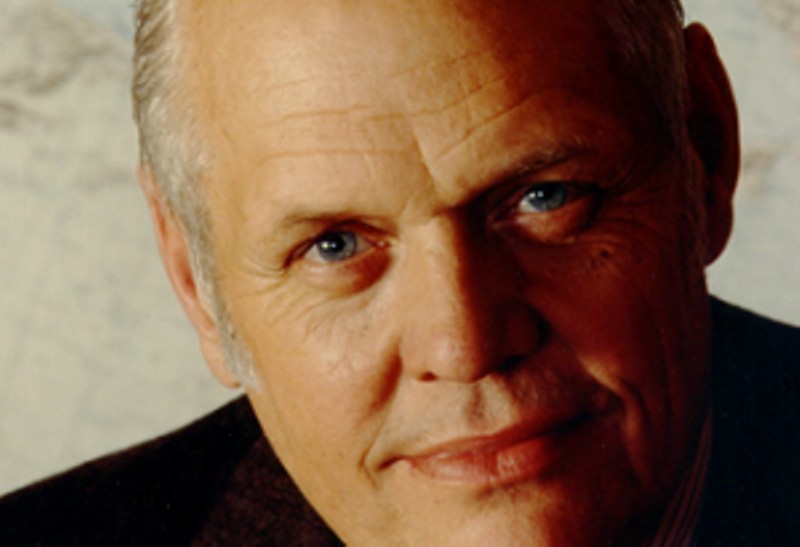
Ken Olsen; Born: February 20, 1926; Died: February 6, 2011
The Computer History Museum lost a dear friend
Legendary computer pioneer, businessman, CHM Fellow and co-founder, Ken Olsen passed away on Sunday Feb 6, 2011 leaving a legacy that touched millions of lives.
Olsen’s computer museum story begins in about 1972 when he and former MIT supervisor Bob Everett began thinking about how to preserve the Whirlwind and TX-0 computers as they were soon becoming available as surplus. The first inklings of a museum of computing were born out of this necessity and Whirlwind (and parts of TX-0) were rescued from the scrapper, forming part of a 1975 DEC museum exhibit and slide show in Maynard, Massachusetts showing different computer logic technologies.
We had a dream of interactive computing. Normal computing was considered big, expensive, awesome, beyond ordinary people. Interactive computing was exciting and fun, and people could interact directly with the computer.
— Ken Olsen
H1LxdYqf3F0
Digital From the Beginning — Ken Olsen on DEC’s early days.
Four Years Later
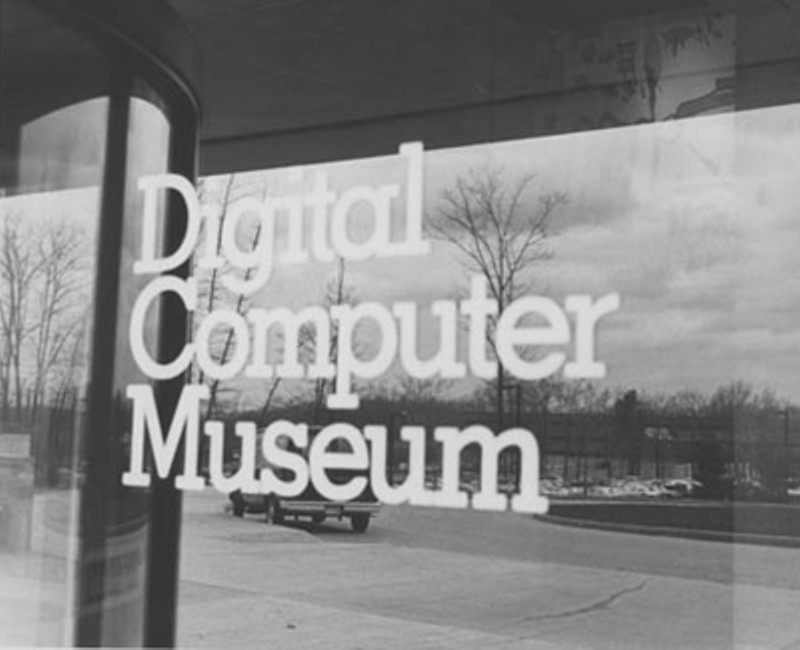
Four years later, and with DEC’s generous support (and, specifically, Ken Olsen’s backing), a public museum was created in DEC’s “MR-2” building in Marlboro, Massachusetts with Gwen Bell as the museum’s first full time, volunteer director. On September 24, 1979, British computer pioneer Maurice Wilkes opened The Digital Computer Museum with a talk on programming the Cambridge University EDSAC. By 1984, the museum had garnered an impressive board of directors, as well as DEC’s continuing support, and opened The Computer Museum on Boston’s Museum Wharf. Intel co-founder Robert Noyce gave the inaugural lecture. The Museum moved to the west coast, to be near Silicon Valley, the new center of computer innovation, in 1996.
What is now the Computer History Museum has its roots in these early Ken Olsen-inspired dreams of a place where the awesome achievements of the information age can be seen, understood, and celebrated by all. The Museum was but one of Ken Olsen’s many visions for the future but is perhaps his most enduring.
Olsen was a practical, hard-working and inspirational leader who changed the course of computing history by introducing the minicomputer, an entirely new class of computer that stressed small size, interactivity and low cost. Starting his company, Digital Equipment Corporation (DEC), in 1957 with $70,000 in financing, at its peak in 1992 DEC had $14 billion in revenue and more than 120,000 employees. DEC’s minicomputers spawned meteoric growth as customers found thousands of new ways to build computer power into applications as diverse as paper mills, subway systems, oil refineries and university research environments. This growth transformed the Route 128 corridor in Massachusetts into a high-tech wonderland and in 1987 DEC was the largest corporate employer in New Hampshire and Massachusetts and the second largest computer company in the world.
Yet DEC Had Humble Beginnings

In his youth, Ken Olsen worked summers in a machine shop and fixed radios in his basement. After serving in the Navy between 1944 and 1946, he attended MIT and then worked at MIT Lincoln Laboratory where he developed the Memory Test Computer and designed some of the hardware on the TX-0 and TX-2 machines, early transistor-based large-scale mainframe computers. Although immense room-filling computers, these were highly interactive and stressed individual use of the machine. It is probably from here that Olsen’s vision of an interactive system for commercial customers drew inspiration. Olsen graduated with B.S. (1950) and M.S. (1952) degrees and started DEC with MIT colleague Harlan Anderson and his brother Stan Olsen five years later. Due to the cautious nature of American Research and Development Corporation (ARD), the venture capital firm that first supported DEC, the company began producing printed circuit logic modules used by engineers to test electronic equipment. In spite of formidable competition in the computing industry from firms like RCA and GE (both of whom were losing money),–not to mention IBM–confidence in the company grew after a couple of years of positive results and DEC was encouraged to try developing a computer based on these modules. Based on these building blocks, and the brilliant engineering skills of DEC engineer Ben Gurley, the company developed the world’s first small interactive computer, the Programmed Data Processor (PDP-1) in 1960. It was a landmark achievement: for only $120,000, one could have a modern, electronic digital computer with highly interactive displays and input/output devices for a fraction of the cost of a mainframe system (which wasn’t even interactive).
DEC’s business boomed after its 1965 introduction of the PDP-8, a small, inexpensive yet powerful machine that could be embedded into larger systems such as scientific apparatus, industrial controllers, and new commercial applications such as text editing and personal computing.

DEC itself was steeped in the MIT engineering tradition. It was a company of engineers, for engineers. It has been said that there was no ‘no’ at DEC. Ideas could come from anywhere in the company hierarchy, the only requirement being that the individual proposing an idea had to defend it in front of his peers and stakeholders and take charge of implementing it. “He who proposes, does” was often heard in company meetings. Most DEC employees, given this sense of empowerment, were fiercely loyal, hard working and looked to Ken Olsen as their mentor and leader. This made for a very dynamic company but, ironically, one that struggled to make sense of the next generation of computer, the PC, and DEC was bought by Compaq in 1998 which, in turn, was bought by HP in 2002.
Ken Olsen’s legacies were many, but we are most proud of and grateful for his vision of a permanent home where the computer, one of the greatest inventions of human history, can be studied and celebrated for generations to come.