
This Day in History

January 8, 1889
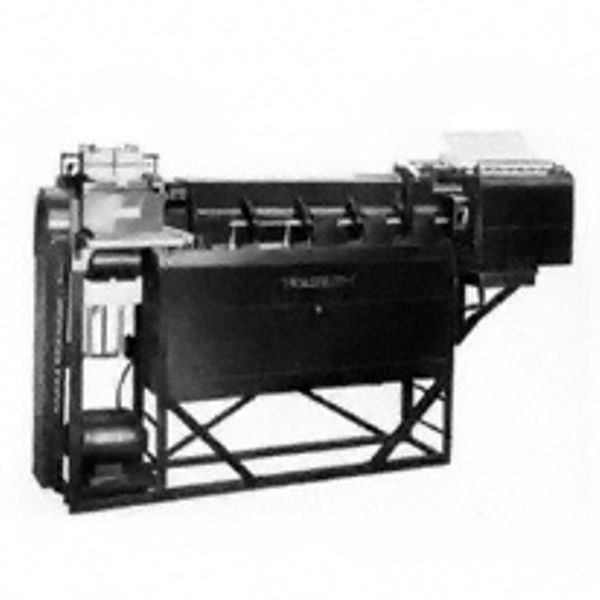
Herman Hollerith Receives a Patent for the Hollerith Tabulating Machine
Herman Hollerith receives a patent for his Hollerith Tabulating Machine, a punch card system that won a contest for a more efficient means of compiling the 1890 U.S. census. To count an item, a small paper card on which a census taker had punched out holes correponding to a citizen's census information, was fed through a press that sensed holes. A wire passing through the holes into a cup of mercury closed an electrical circuit and registered the item. In 1924, Hollerith's Tabulating Machine Co., and two other merged firms, became International Business Machines (IBM)

January 8, 1940
Bell Labs' Complex Computer makes the first run
Bell Labs Complex Computer, a full-scale relay calculator designed by George Stibitz, was capable of performing complex arithmetic calculations necessary for circuit design. In the fall of 1937 Dr. Stibitz, an engineer at Bell Labs, used surplus relays, tin-can strips, flashlight bulbs and other canonical items to construct his K-machine (K-for Kitchen table), a breadboard digital calculator, which could add two bits and display the result. Bell Labs recognized a potential solution to the problem of high-speed complex-number calculation, which was holding back contemporary development of wide-area telephone networks. By late 1938 the laboratory had authorized development of a full-scale relay calculator based on the Stibitz model, and in April 1939 Stibitz and his design team began the construcion.