

What Happened Today, September 26th
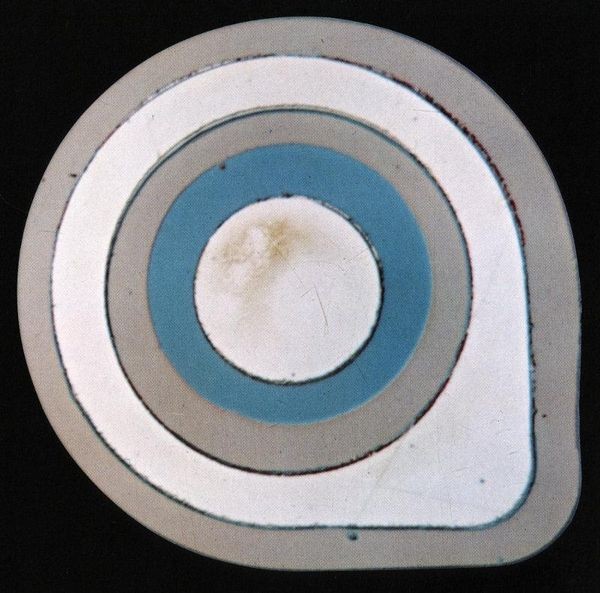
Jean Hoerni, a pioneer of the transistor, is born in Switzerland. A physicist, Hoerni in 1959 invented the planar process, which, combined with Robert Noyce's technique for placing a layer of silicon dioxide on a transistor, led to the creation of the modern integrated circuit. Hoerni's planar process allowed the placement of complex electronic circuits on a single chip.
What Happened This Week

With tensions between China and Japan escalating because of a disputed territorial claim over a chain of islands, the Chinese government alerted Beijing residents of a ban on anti-Japan protests via text message. Previous protests had turned violent and resulted in damage, vandalism, and the detainment of a number of protesters. In conjunction with other factors, SMS text messaging appeared to be successful as the delivery mechanism for the citywide announcement. Only small-scale protests were reported in some regions. As citizens grow more dependent on mobile and social media technology for the latest news and alerts, centralized authorities have gained more open access to, and possibly influence of, the general populace’s daily lives.
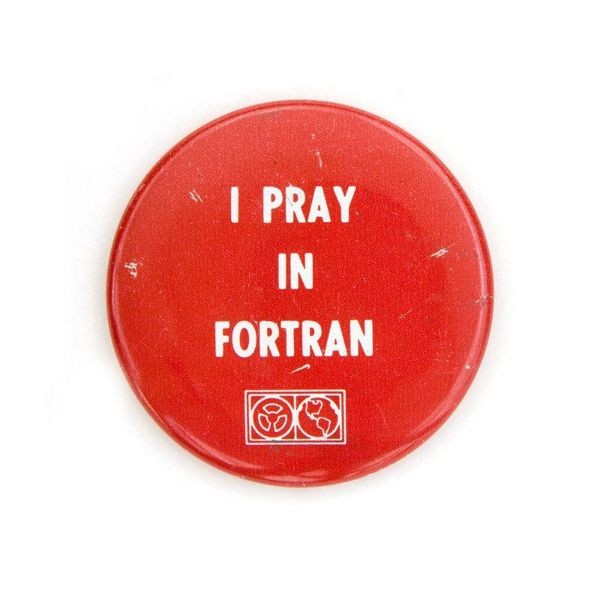
The first successful FORTRAN program runs. FORTRAN, which is an acronym for "FORmula TRANslator," was invented at IBM by a group led by John Backus. FORTRAN's purpose was to simplify the programming process by allowing the programmer ("coder") to use simple algebra-like expressions when writing software. It also took over the task of keeping track of where instructions were kept in memory--a very laborious and error-prone procedure when undertaken by humans. FORTRAN is still in use today in scientific and engineering applications, making it one of the oldest programming languages still in use (COBOL is another). Backus was named a Computer History Museum Fellow in 1997.
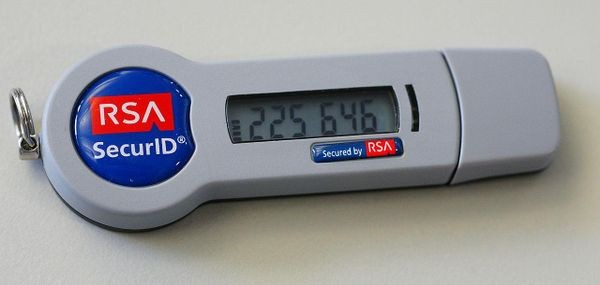
The RSA algorithm, one of the world's most widely-used encryption methods, had been developed in 1977. Scientific American columnist Martin Gardner wrote a description of the algorithm in his "Mathematical Games" column, mentioning that readers could send a self-addressed stamped envelope to receive a copy of the MIT technical memorandum describing it. More than three thousand people sent envelopes, though they did not receive their copies of the papers until after the patent was issued six years later due to members of the National Security Agency raising questions about the legality of making the information available.

A New York Times article warned against the dangers of trusting computers too completely after an investigation revealed that a programming error may have contributed to the crash of American Airlines Flight 965 in Colombia in December 1995. The pilots apparently selected the first choice of a beacon to guide the plane's autopilot to a landing without checking that it was what they actually wanted. As a result, the plane was directed 100 miles off course, with the devastating result of 159 deaths.
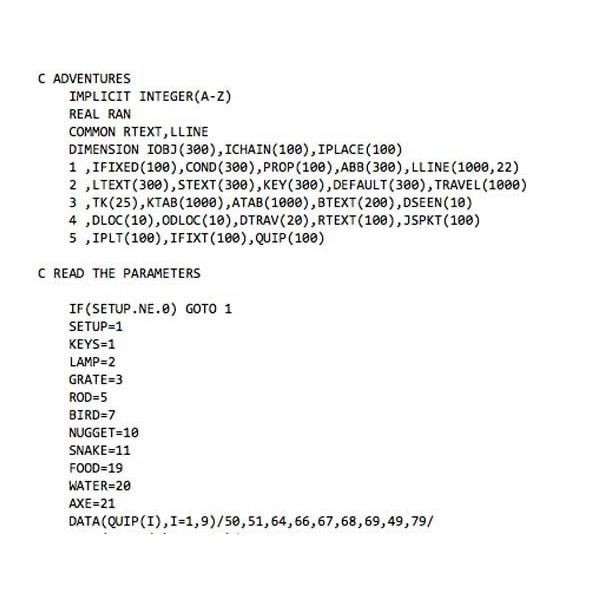
In a decisive victory for the makers of a computer's insides, a federal judge ruled that code used to run computers and other electronic devices could be copyrighted like printed material.
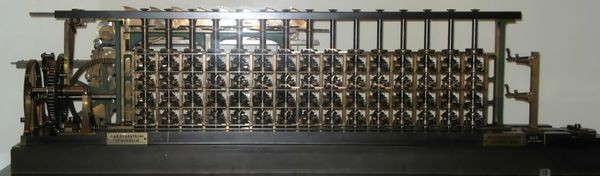
Georg Scheutz (1785-1873), who with his son built a commercially available calculator based on Charles Babbage's Difference Engine, is born in Stockholm. After reading about the Difference Engine in 1833, Scheutz and son Edvard worked on a version that could process 15-digit numbers and calculate using fourth-order differences. The result won the gold medal at the Paris Exhibition in 1855 and was used by the Dudley Observatory in New York to calculate a few tables. A second copy was used by the British Registrar General to calculate tables for the developing life insurance industry.
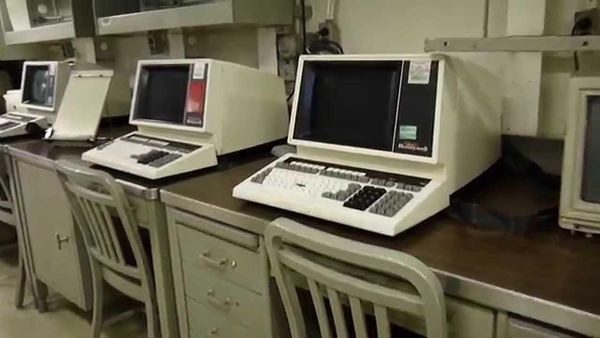
Honeywell, a company that joined the early foray into the computer industry but had faded from prominence by the mid-1980s, announced it was beginning discussions of a merger of its computer operations with the Japanese firm NEC and France's Groupe Bull. Analysts saw the move as part of a trend of consolidation in the industry prompted in part by IBM's control of more than half the market. Honeywell had experienced a 37-percent drop in its first half 1986 earnings.
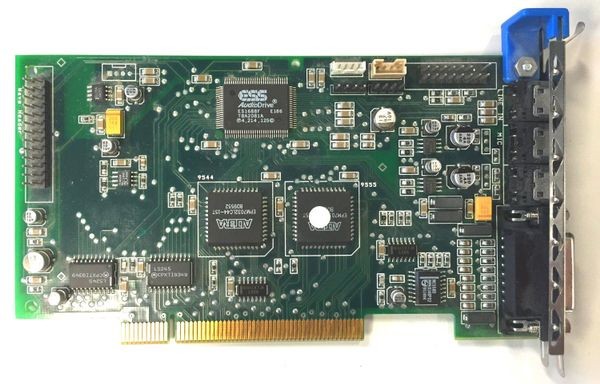
IBM announces plans to develop a new design for transmitting information within a computer, called Micro Channel Architecture, which it said could transfer data at 160 million bytes per second or eight times faster than the fastest speed at the time. Although IBM was hoping to make its system the industry standard, manufacturers of IBM-compatible computers largely chose other methods.
Jean Hoerni, a pioneer of the transistor, is born in Switzerland. A physicist, Hoerni in 1959 invented the planar process, which, combined with Robert Noyce's technique for placing a layer of silicon dioxide on a transistor, led to the creation of the modern integrated circuit. Hoerni's planar process allowed the placement of complex electronic circuits on a single chip.