

What Happened Today, June 17th
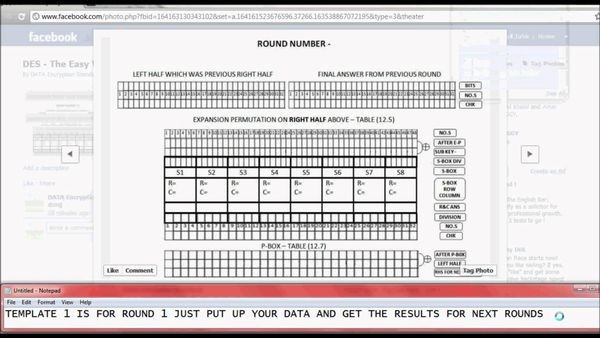
Hackers deciphered computer code written in the Data Encryption Standard, which had been designed to be an impenetrable encryption software. A group of users organized over the Internet cracked the software -- the strongest legally exportable encryption software in the United States -- after five months of work. The United States bans stronger encryption software out of fear that it would be used by terrorists, but companies designing the software say such restrictions are worthless because foreign countries offer much stronger programs.
What Happened This Week
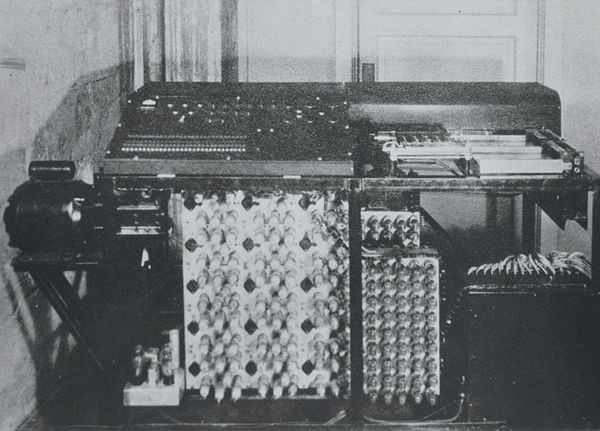
John Mauchly arrived in Iowa City for a visit with John Atanasoff to see his computer. The two computer pioneers later found themselves in a court battle over who would be deemed the legal inventor of the electronic digital computer. Atanasoff emerged from the long and tangled legal battle as the victor after Honeywell Inc. charged Sperry Rand Corp. with enforcement of a fraudulent patent. During the course of the trial, Atanasoff's work emerged, and a judge determined his work had preceded and contributed to development of the ENIAC.
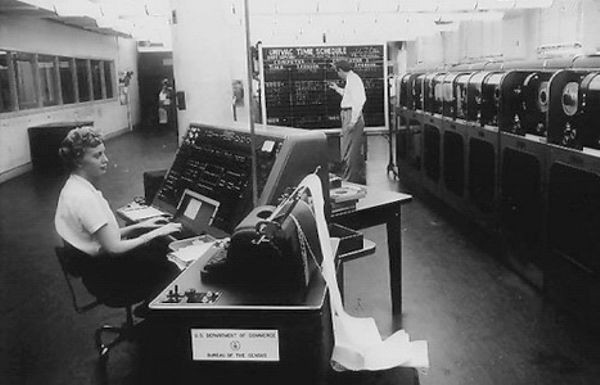
The US Census Bureau dedicated its first UNIVAC computer -- and experienced its first programming error. Once the bugs were fixed, the UNIVAC I became the first commercial computer to attract widespread public attention. Remington Rand eventually sold 46 machines at more than $1 million each.
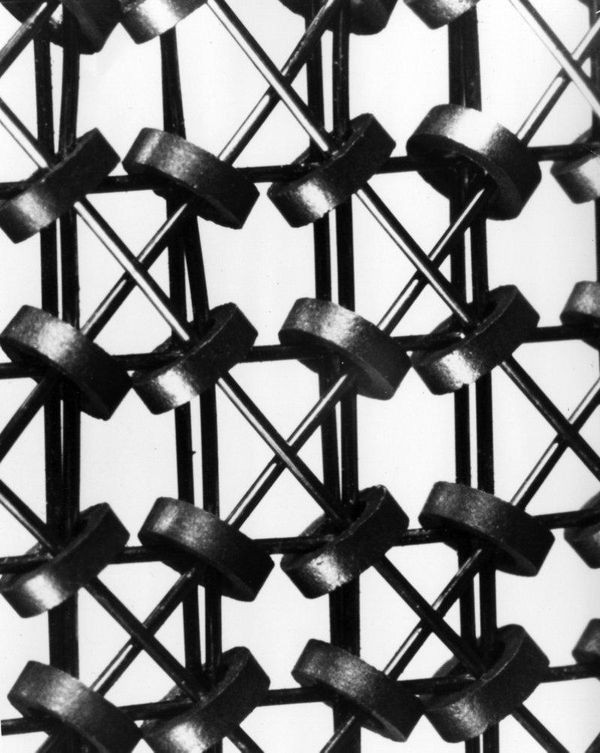
Jay Forrester recorded a proposal for core memory in his notebook. A professor at MIT at the time, Forrester eventually installed magnetic core memory on the Whirlwind computer. Core memory made computers more reliable, faster, and easier to make. Such a system of storage remained popular until the development of semiconductors in the 1970s.
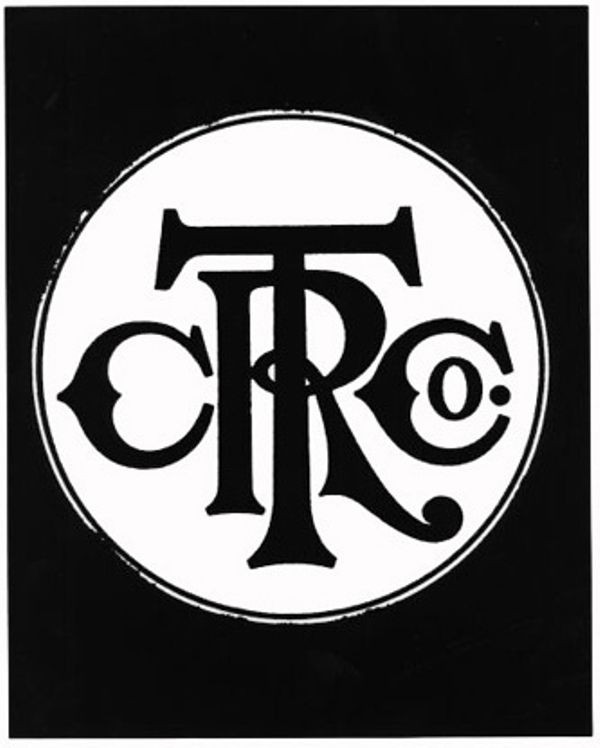
Financier Charles Flint built trusts by merging several smaller companies to form dominant company in particular fields. He had already formed International Time Recording Company that was the major player in factory time clocks and Computing Scale Company of America for scales. He then bought out Herman Hollerith, the founder of Hollerith Tabulating Machine Company, and merged the three companies into Control-Tabulating-Recording Company, or C-T-R. The new company continued to produce all teh goods the individual companies had specilized in, but eventually focused on the unit record equipment that Hollerith's company had made. In the 1920s, C-T-R would rename itself IBM.
Hackers deciphered computer code written in the Data Encryption Standard, which had been designed to be an impenetrable encryption software. A group of users organized over the Internet cracked the software -- the strongest legally exportable encryption software in the United States -- after five months of work. The United States bans stronger encryption software out of fear that it would be used by terrorists, but companies designing the software say such restrictions are worthless because foreign countries offer much stronger programs.

The Los Angeles Times reported on high school senior Kevin Chang, who won an area computer science contest with a program to improve traffic flow by automatically controlling acceleration and braking. Chang's program utilized an infrared sensor that monitored the distance between a car and other objects and told the car whether to speed up or slow down.
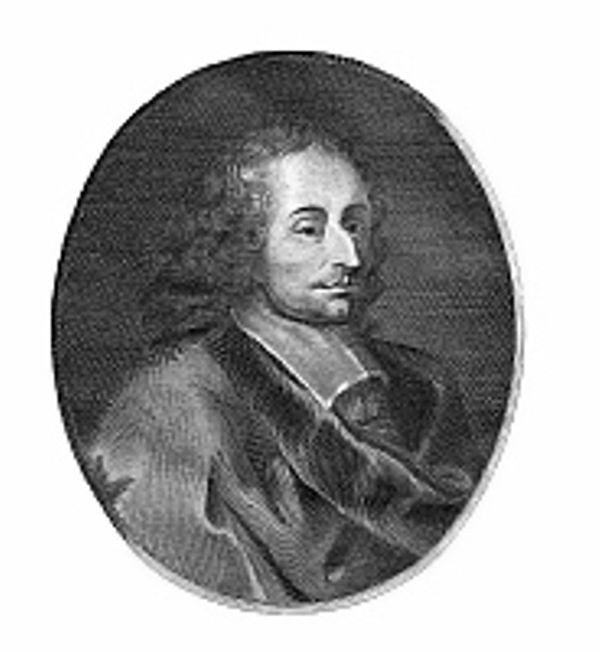
Mathematician Blaise Pascal was born in France. Before he died at age 39, Pascal produced several important theorems and treatises on geometry, physics, theology, and other subjects. His most significant contribution to computing came with the invention of the Pascaline, a digital calculator that he designed to help his father in his tax-collecting work.
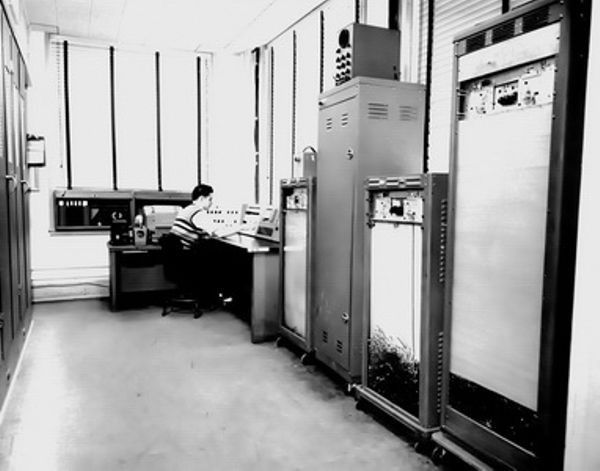
The National Bureau of Standards dedicated the SEAC (Standards Eastern Automatic Computer) in Washington as a laboratory for testing components and systems for setting computer standards. The SEAC was the first computer to use all-diode logic, a technology more reliable than vacuum tubes, and was the first stored-program computer completed in the United States. Magnetic tape in the external storage units stored programming information, coded subroutines, numerical data, and output.