


What Happened Today, September 16th

Microsoft Corp. unveils an improved version of WebTV after purchasing the Silicon Valley startup earlier in the year for $425 million -- a price that worked out to $8,500 for each of the company's existing customers. The purchase reflected Microsoft's ongoing effort to create systems that integrate the Internet, preferably using it's Internet Explorer World Wide Web browser. Because many more American families own television sets than own personal computers, the ability to browse the Web, do interactive shopping, or otherwise turn the TV into a network computer could dramatically increase Internet accessibility.
What Happened This Week
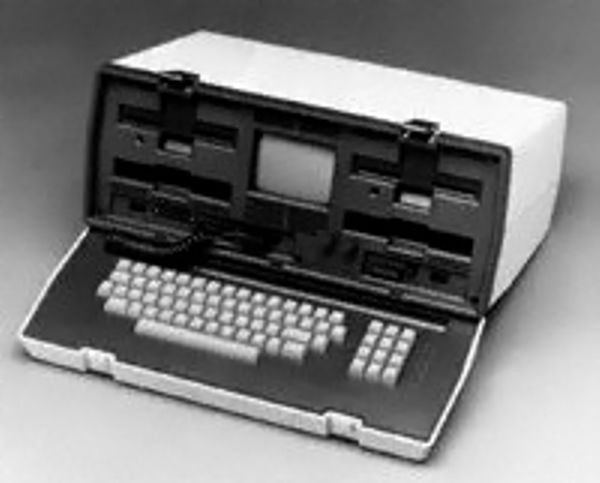
Osborne Computer declares bankruptcy, two years after producing the first portable computer, the 24-pound Osborne I. Designed by company founder Adam Osborne, the $1,795 machine included software worth about $1,500. The machine featured a 5-inch display, 64 kilobytes of memory, a modem, and two 5 1/4-inch floppy disk drives
In April 1981, Byte Magazine Editor-in-Chief Chris Morgan mentioned the Osborne I in an article on "Future Trends in Personal Computing." He wrote: "I recently had an opportunity to see the Osborne I in action. I was impressed with it's compactness: it will fit under an airplane seat. (Adam Osborne is currently seeking approval from the FAA to operate the unit on board a plane.) One quibble: the screen may be too small for some people's taste."

Bank of America accepts the ERMA (Electronic Recording Method of Accounting) system. This revolutionary system digitized checking for the Bank of America by creating a computer-readable font. A special scanner read account numbers preprinted on checks in magnetic ink. The system was developed at the Stanford Research Institute in Menlo Park, California.

The Association for Computing Machinery (ACM) is founded. With more than 100,000 members from over 100 countries as of 2014, ACM organizes conferences and educational workshops to exchange information on computing technology.
Microsoft Corp. unveils an improved version of WebTV after purchasing the Silicon Valley startup earlier in the year for $425 million -- a price that worked out to $8,500 for each of the company's existing customers. The purchase reflected Microsoft's ongoing effort to create systems that integrate the Internet, preferably using it's Internet Explorer World Wide Web browser. Because many more American families own television sets than own personal computers, the ability to browse the Web, do interactive shopping, or otherwise turn the TV into a network computer could dramatically increase Internet accessibility.
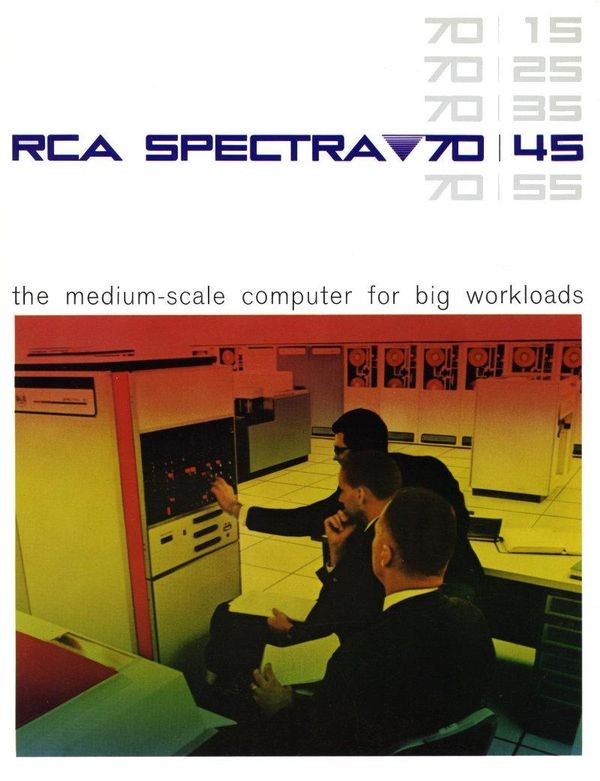
RCA withdraws from the computer market after losing $490 million. RCA, one of the “Seven Dwarfs,” a group that included Honeywell, Control Data Corporation, Univac, Burroughs, NCR, and General Electric, had tried to compete with IBM in the mainframe computer market, but were ultimately unsuccessful. RCA’s Spectra 70/45 computer was launched as a competitor to the IBM 360 and RCA heavily lauded its reliance on monolithic ICs as opposed to the 360’s hybrid SLT modules. The Spectra had some cross-compatibility with 360 instruction sets and software, but the operating systems proved unable to facilitate easy transfer of programs across the two systems. The 360 gained a stranglehold in the market, and in part led to RCA’s, and the other Seven Dwarfs’, demise in the mainframe computer market.

James Cooley, co-creator of the fast Fourier transform, was born. Working with John Tukey, Cooley in 1965 worked out a vast improvement to a common mathematical algorithm called the Fourier transform. Although the algorithm had been useful in computing, its complexity required too much time. While working at IBM, Cooley built on Tukey's ideas for a swifter version.

With tensions between China and Japan escalating because of a disputed territorial claim over a chain of islands, the Chinese government alerted Beijing residents of a ban on anti-Japan protests via text message. Previous protests had turned violent and resulted in damage, vandalism, and the detainment of a number of protesters. In conjunction with other factors, SMS text messaging appeared to be successful as the delivery mechanism for the citywide announcement. Only small-scale protests were reported in some regions. As citizens grow more dependent on mobile and social media technology for the latest news and alerts, centralized authorities have gained more open access to, and possibly influence of, the general populace’s daily lives.