

What Happened Today, October 15th
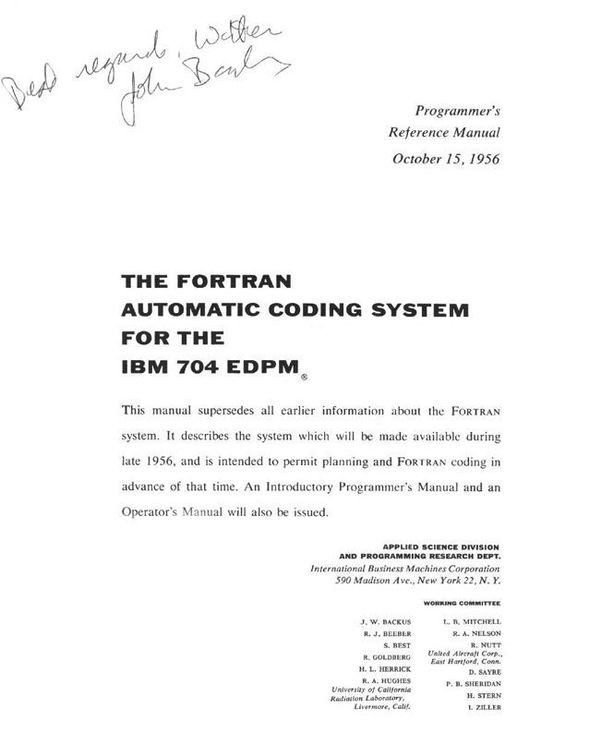
The first FORTRAN reference manual is released on October 15, 1956, six months before the first compiler's release. Only 60 pages long, with large print and wide margins, that first programming language was miniscule by today's standard. The original FORTRAN development team comprised John Backus, Sheldon Best, Richard Goldberg, Lois Mitchell Haibt, Harlan Herrick, Grace Mitchell, Robert Nelson, Roy Nutt, David Sayre, Peter Sheridan, and Irving Ziller.
What Happened This Week
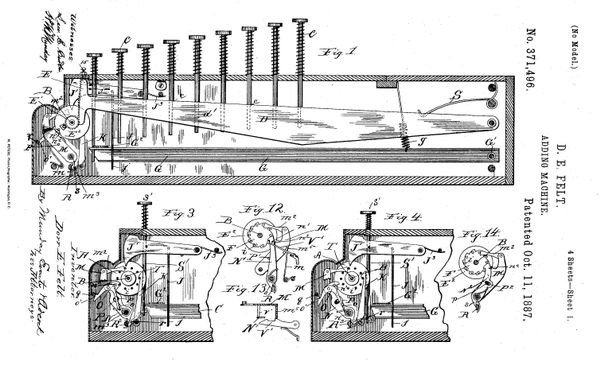
Dorr E. Felt was granted a patent for the Comptometer. He experimented with an adding device that he built in a "macaroni box." The Comptometer, an adder, displayed a single register of results. Subtraction was carried out by nines-complement arithmetic, and multiplication by repeated addition. The Comptometer was a commercial success for businesses, and "Comptometer schools" were established early in the 20th century to teach the efficient operation of this machine.
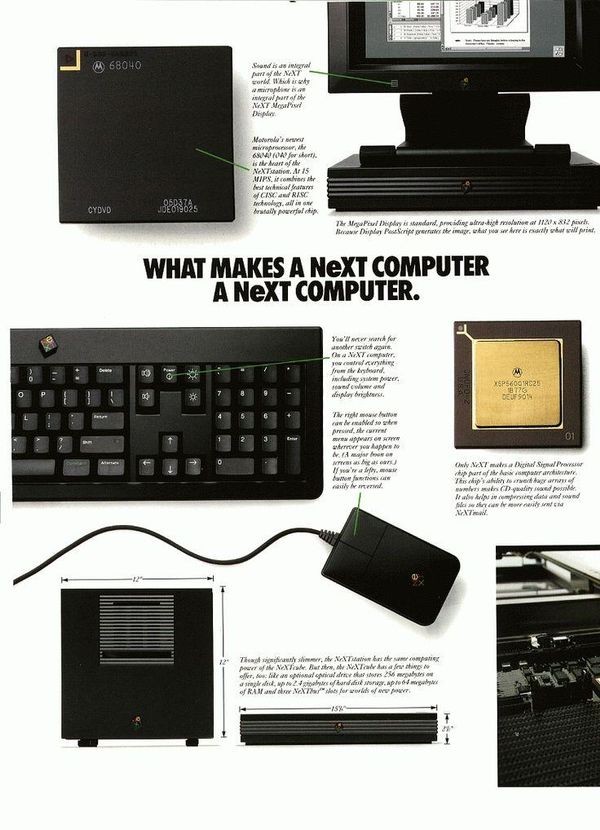
Steve Jobs unveils the NeXT, the computer he conceived of after moving on from Apple Computer Inc., which he had founded with Steve Wozniak. Although the NeXT ultimately failed in the marketplace, it introduced several features new to personal computers, including an optical storage disc, a built-in digital signal processor that allowed voice recognition, and object-oriented languages that simplified programming. It's relatively high price of $6,500 limited sales. NeXT Computer Inc. eventually became NeXT Software Inc. and then was bought by Apple in 1997.
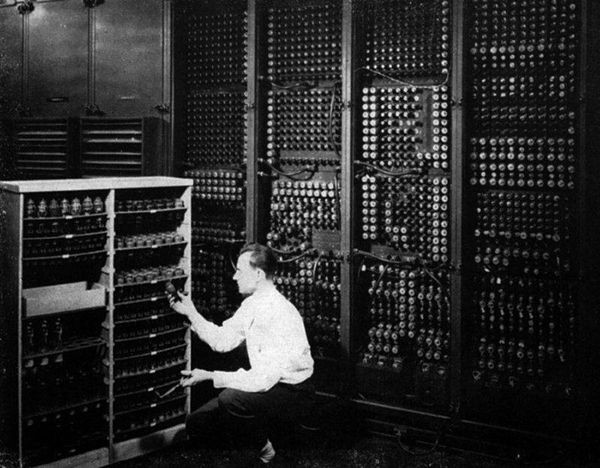
A principal designer of the ENIAC, Arthur Burks, was born. Burks -- who was born in Duluth, Minnesota, and educated at DePauw University and the University of Michigan -- did extensive work on the ENIAC, the machine designed at the University of Pennsylvania’s Moore School and completed in 1946. After working with J. Presper Eckert and John Mauchly on the ENIAC, Burks moved on to Princeton University, where he helped John von Neumann develop his computer at the Institute for Advanced Studies.
October 14 is the anniversary of the British Computer Society (BCS), founded in 1957. BCS is one of the several international societies that have an affiliate membership relationship with the IEEE Computer Society. Since 1984 BCS has operated under a Royal Charter which requires it to: "...promote the study and practice of Computing and to advance knowledge therein for the benefit of the public."
The first FORTRAN reference manual is released on October 15, 1956, six months before the first compiler's release. Only 60 pages long, with large print and wide margins, that first programming language was miniscule by today's standard. The original FORTRAN development team comprised John Backus, Sheldon Best, Richard Goldberg, Lois Mitchell Haibt, Harlan Herrick, Grace Mitchell, Robert Nelson, Roy Nutt, David Sayre, Peter Sheridan, and Irving Ziller.
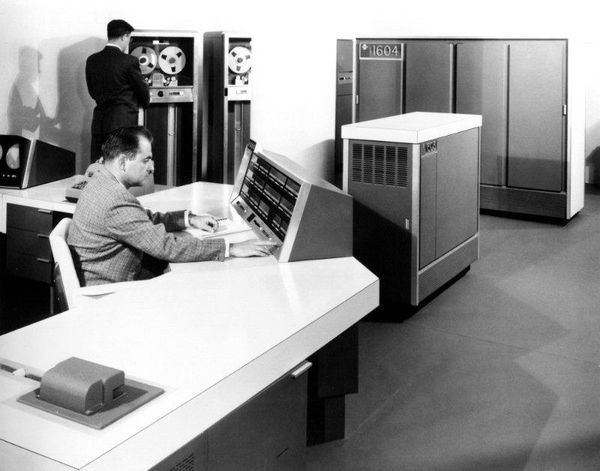
Control Data Corp. released its model 1604 computer, the first in the line from the company formed by a group that left Sperry Rand Corp., led by William Norris. The 1604 was the most powerful computer in its day, designed by Seymour Cray, who would go on to a career in building supercomputers. Applications of the CDC 1604 included processing data in real time, controlling weapons systems, solving large-scale scientific problems, and commercial applications.
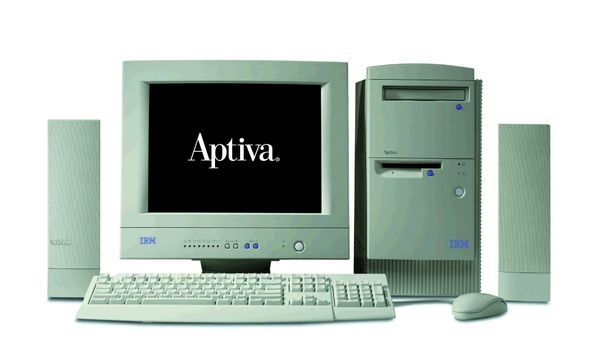
IBM Corp. announced it would be cutting back its line of personal computers from nine models to four. It also notified the public of several new models and said it would bring back the brand name many connected to the company, the IBM PC. The plan for consolidating IBM’s personal computer production was to have four divisions: IBM PC for commercial desktop machines, IBM PC Server for larger computers used on networks, Thinkpad for portables, and Aptiva for the home market.