
| |
Timeline of Computer History |
|
| |
 |
People & Pop Culture |
 |
|
1945 |
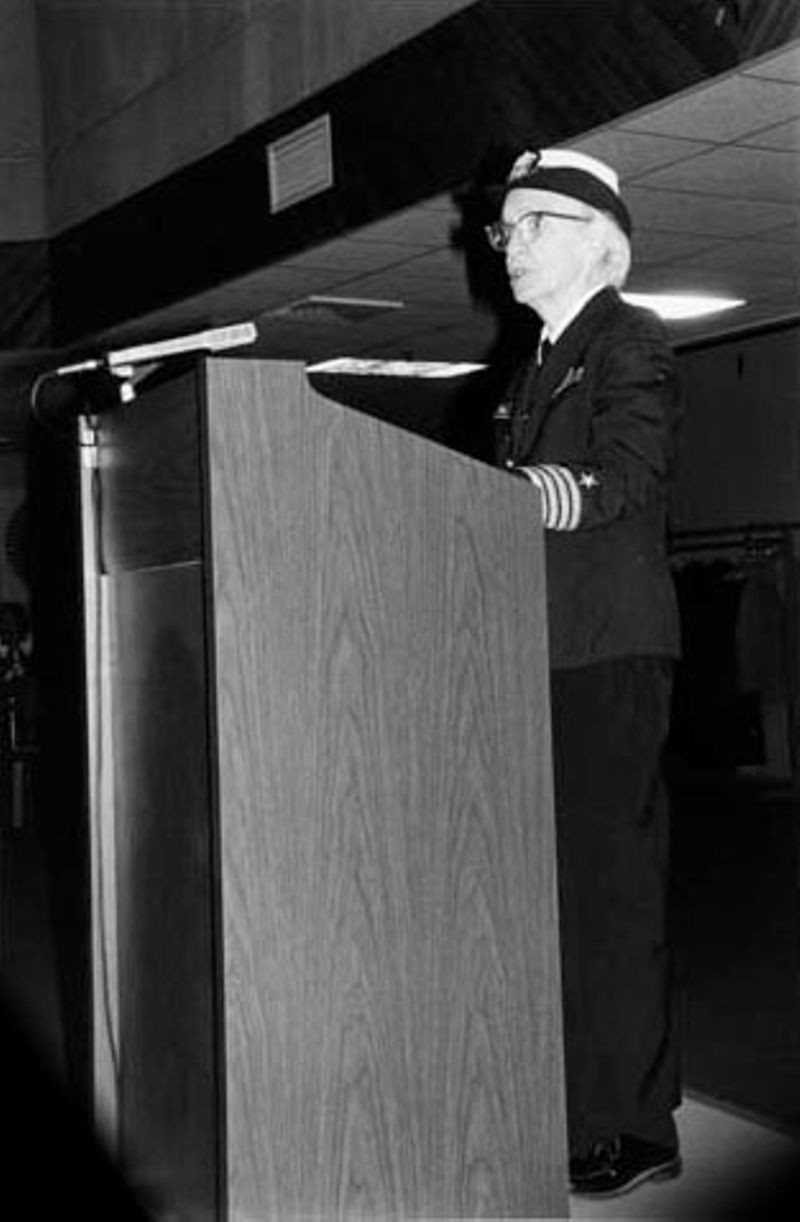
 Grace Hopper |
 |
On September 9th, Grace Hopper recorded the first actual computer "bug" a moth stuck between the relays and logged at 15:45 hours on the Harvard Mark II. Hopper, a rear admiral in the U.S. Navy, enjoyed successful careers in academia, business, and the military while making history in the computer field. She helped program the Harvard Mark I and II and developed the first compiler, A-0. Her subsequent work on programming languages led to COBOL, a language specified to operate on machines of different manufacturers. |

|
1949 |
| |
 |
Thomas Watson Jr., speaking to an IBM sales meeting, predicted all moving parts in machines would be replaced by electronics within a decade. |
|
1952 |
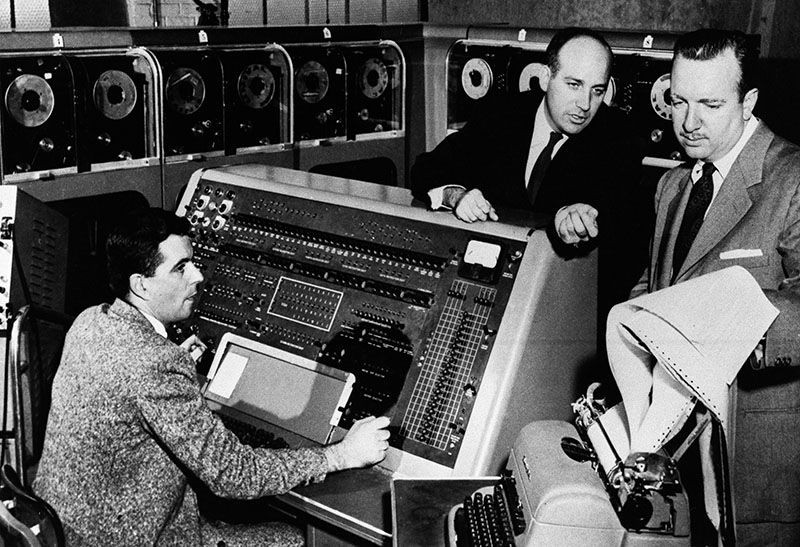
 Cronkite with UNIVAC |
 |
On election night, November 4, CBS News borrowed a UNIVAC to make a scientific prediction of the outcome of the race for the presidency between Dwight D. Eisenhower and Adlai Stevenson. The opinion polls predicted a landslide in favor of Stevenson, but the UNIVAC´s analysis of early returns showed a clear victory for Eisenhower. Its sharp divergence from public opinion made newscasters Walter Cronkite and Charles Collingwood question the validity of the computer´s forecast, so they postponed announcing UNIVAC´s prediction until very late. |
|
1954 |
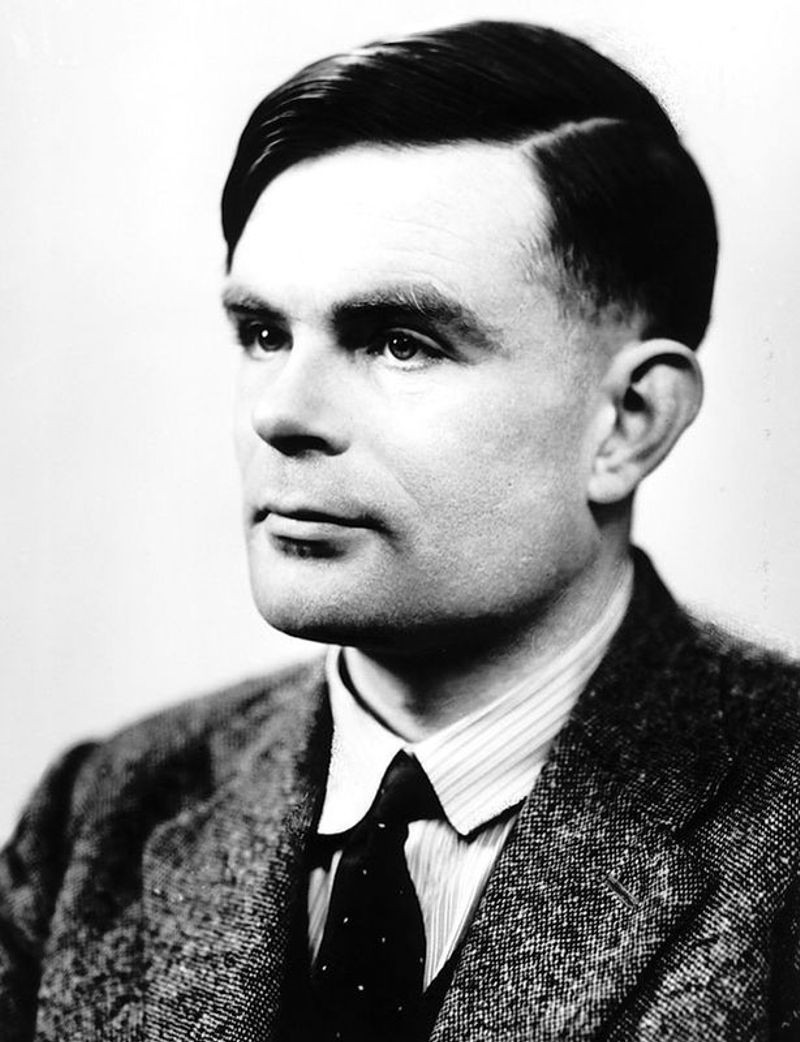
 Alan Turing |
 |
Alan Turing was found dead at age 42. He had published his seminal paper, "On Computable Numbers," in 1936, as well as posing significant questions about judging "human intelligence" and programming and working on the design of several computers during the course of his career.
A mathematical genius, Turing proved instrumental in code-breaking efforts during World War II. His application of logic to that realm would emerge even more significantly in his development of the concept of a "universal machine." |
|
1955 |
| |
 |
First meeting of SHARE, the IBM users group, convened. User groups became a significant educational force allowing companies to communicate innovations and users to trade information. |
|
1970 |
| |
 |
Vietnam War protesters attacked university computer centers. At the University of Wisconsin, the toll was one human and four machines. |
|
1982 |
| |
 |
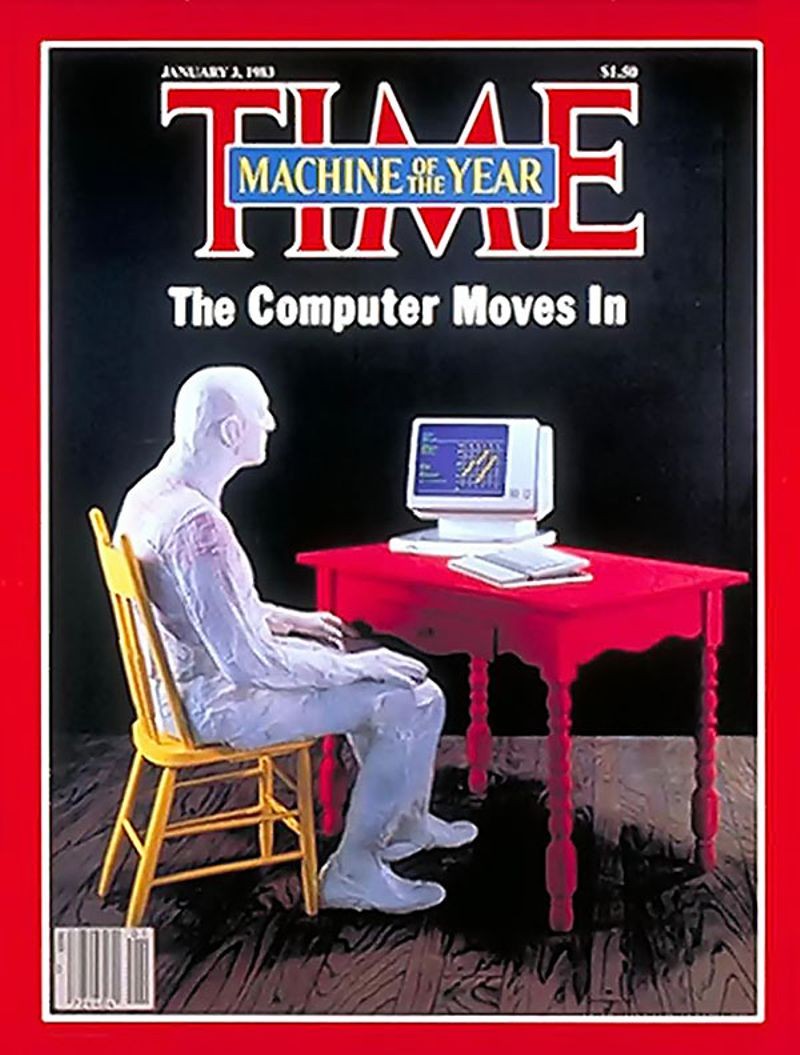
Time magazine altered its annual tradition of naming a "Man of the Year," choosing instead to name the computer its "Machine of the Year." In introducing the theme, Time publisher John A. Meyers wrote, "Several human candidates might have represented 1982, but none symbolized the past year more richly, or will be viewed by history as more significant, than a machine: the computer.
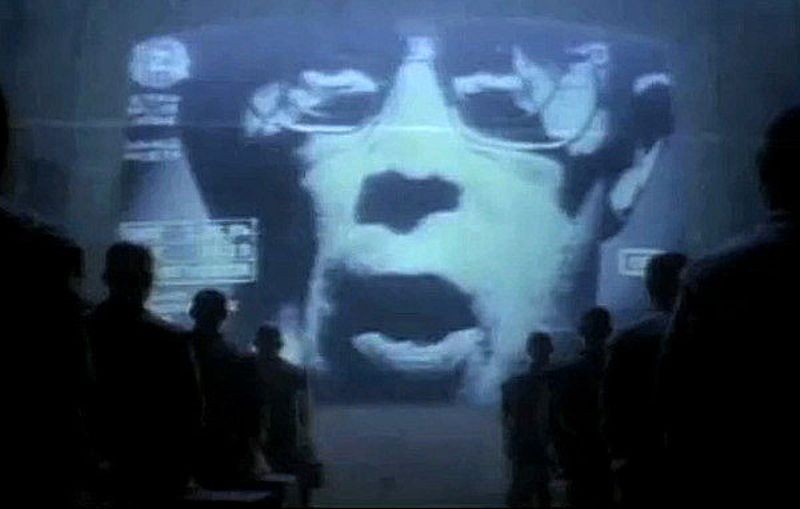
His magazine, he explained, has chronicled the change in public opinion with regard to computers. A senior writer contributed: "computers were once regarded as distant, ominous abstractions, like Big Brother. In 1982, they truly became personalized, brought down to scale, so that people could hold, prod and play with them." At Time, the main writer on the project completed his work on a typewriter, but Meyers noted that the magazine's newsroom would upgrade to word processors within a year. |
|
 |
| |
 |
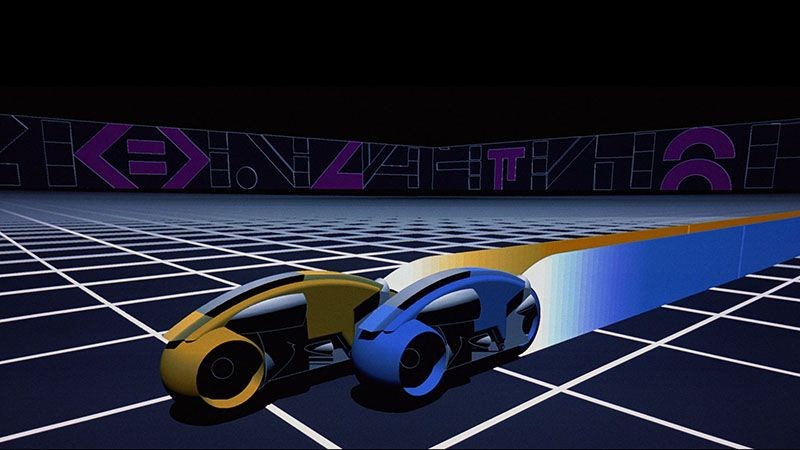
The use of computer-generated graphics in movies took a step forward with Disney´s release of "Tron." One of the first movies to use such graphics, the plot of "Tron" also featured computers - it followed the adventures of a hacker split into molecules and transported inside a computer. Computer animation, done by III, Abel, MAGI, and Digital Effects, accounted for about 30 minutes of the film. |
|
1984 |
 Gibson´s Neuromancer |
 |
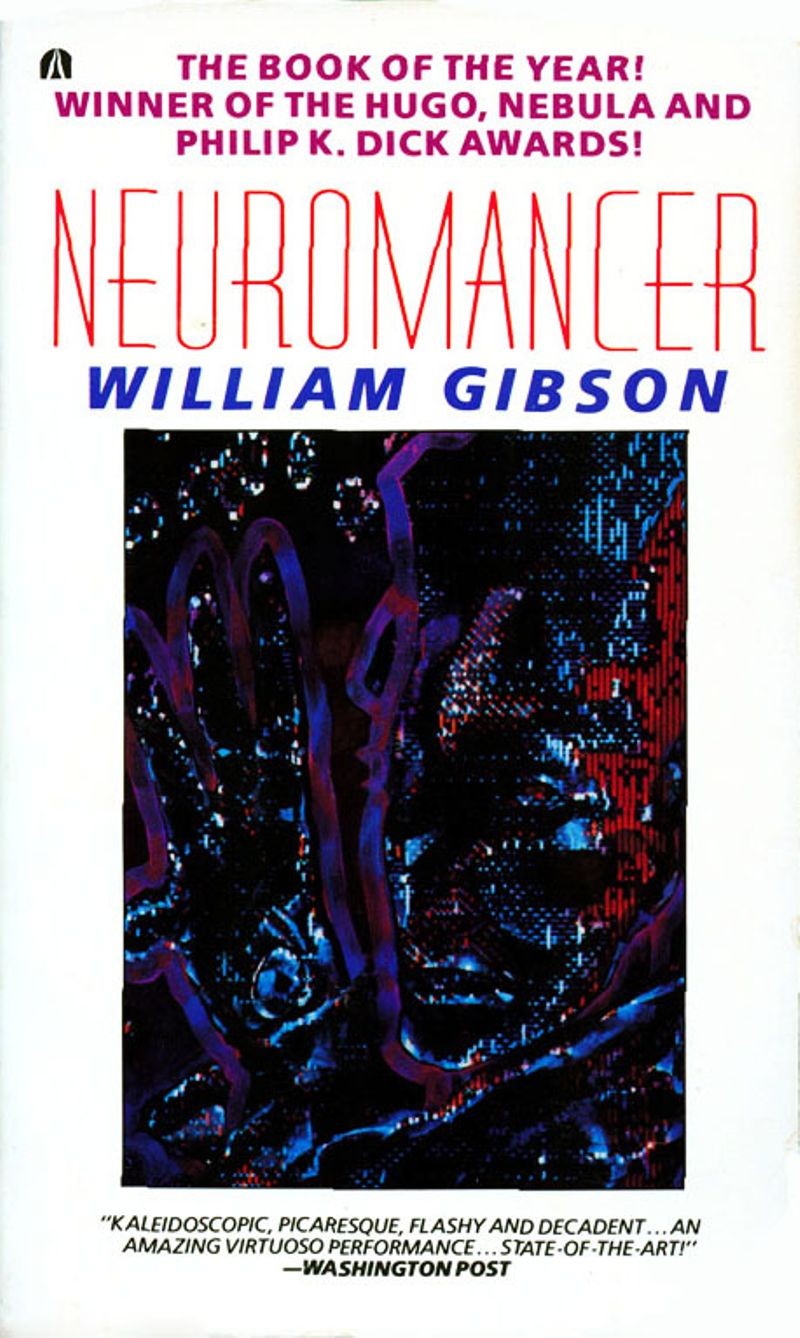
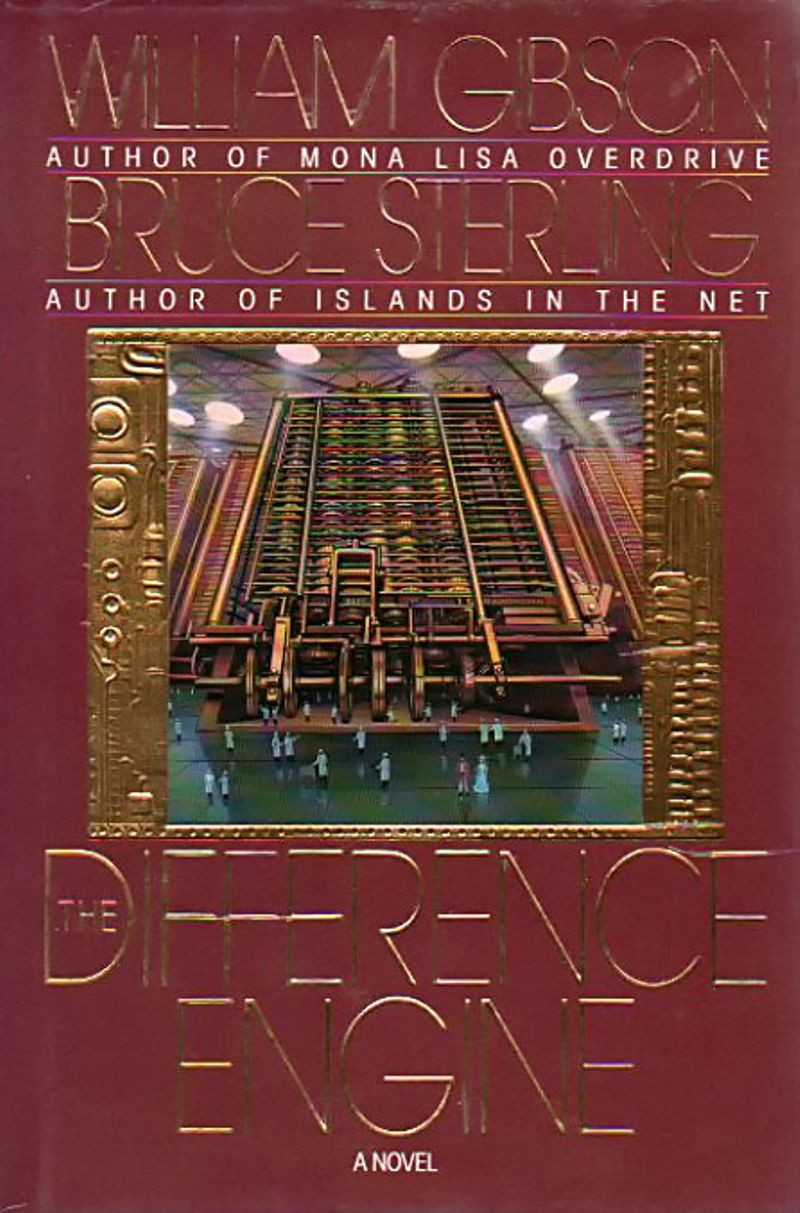
In his novel "Neuromancer," William Gibson coined the term "cyberspace." He also spawned a genre of fiction known as "cyberpunk" in his book, which described a dark, complex future filled with intelligent machines, computer viruses, and paranoia.
Gibson introduced cyberspace as: "A consensual hallucination experienced daily by billions of legitimate operators, in every nation, by children being taught mathematical concepts... A graphic representation of data abstracted from the banks of every computer in the human system. Unthinkable complexity. Lines of light ranged in the nonspace of the mind, clusters and constellations of data. Like city lights, receding..." (p. 51). |
|
1988 |
 Still from Pixar's Tin Toy |
 |
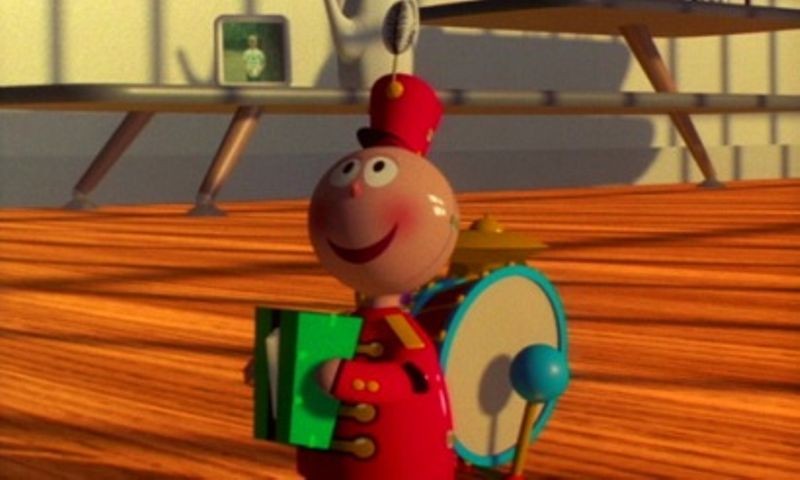
Pixar´s "Tin Toy" became the first computer-animated film to win an Academy Award, taking the Oscar for best animated short film. A wind-up toy first encountering a boisterous baby narrated "Tin Toy." To illustrate the baby´s facial expressions, programmers defined more than 40 facial muscles on the computer controlled by the animator.
Founded in 1986, one of Pixar´s primary projects involved a renderer, called Renderman, the standard for describing 3-D scenes. Renderman describes objects, light sources, cameras, atmospheric effects, and other information so that a scene can be rendered on a variety of systems. The company continued on to other successes, including 1995´s "Toy Story," the first full-length feature film created entirely by computer animation. |
|
|
|
 |
|