



![]() |
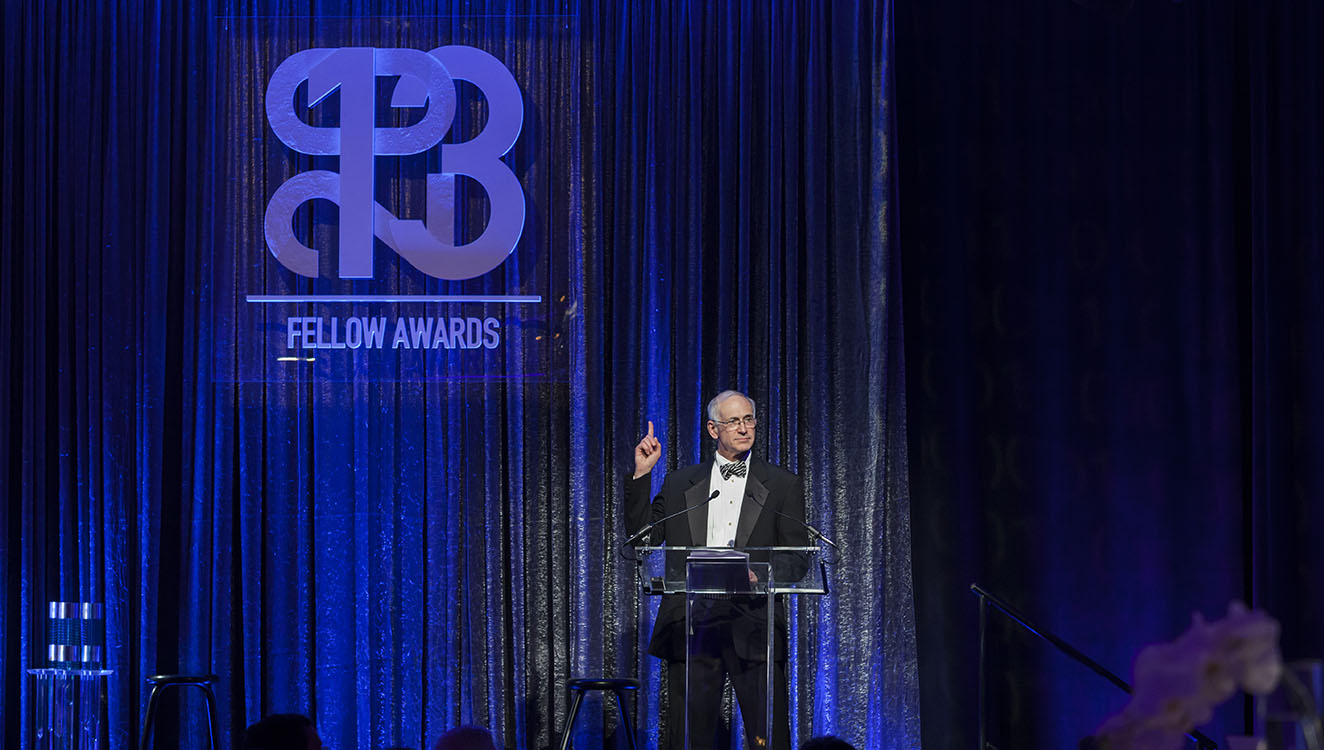
For his contributions in pioneering the automation, methodology and teaching of integrated circuit design.
"Listen to the technology; find out what it's telling you." |
Carver Mead was born in Bakersfield, California, on May 1, 1934.
Mead has made many pioneering contributions in solid-state electronics, and was one of the leading forces in very large scale integration (VLSI) design methodology.
His major innovations include the GaAs MESFET, a key amplifying device used in microwave communication systems from radio telescopes to home satellite dishes and cellular phones. Mead is also well known for pioneering computer-aided design of VLSI circuitry through his methodology of "structured custom design," an approach now used by all semiconductor companies.
Mead’s work with VLSI design has also included co-authoring the canonical text in the field with Lynn Conway in 1979, Introduction to VLSI Systems, a book that was the standard reference text for a generation of IC designers.
"Carver has demonstrated a unique ability to identify areas of developing importance in electronics and to jump in at the right time to accelerate progress," says Gordon E. Moore, Chairman Emeritus, Intel Corporation. "His contributions to VLSI design trained a generation of engineers that has driven the semiconductor industry, and his work on electronic analog and biological systems has advanced both neural networks and our understanding of how our eyes and ears process information."
Mead’s other work involves experimenting with "neuromorphic electronic systems"—circuits modeled on living nervous systems. He has also developed a unified approach to electromagnetism based on the quantum nature of the electron.
Mead is the recipient of many awards, including the Lemelson-MIT Prize (1999). He holds over 50 U.S. patents and fellowships or distinguished memberships in seven different scientific and professional societies. He is the Gordon and Betty Moore professor emeritus at the California Institute of Technology (Caltech), having taught there for over 40 years.
Mead holds B.S. (1956), M.S. (1957), and Ph.D. (1959) degrees from Caltech in electrical engineering.